You choose the clip
The app does not request broad read access to your photo and video library.
Loop search, stabilization, blending, audio processing, and rendering all happen on the device. Video files are not uploaded for processing.
The app opens only the clip you choose through Android’s picker or share flow. Temporary processing files and the finished render remain on the device.
The app does not request broad read access to your photo and video library.
Analysis, motion processing, blending, audio work, and encoding run on the phone.
The finished MP4 is passed to Android’s share sheet for you to save or send.
The app uses Firebase for the following records. Source and rendered video files are not attached.
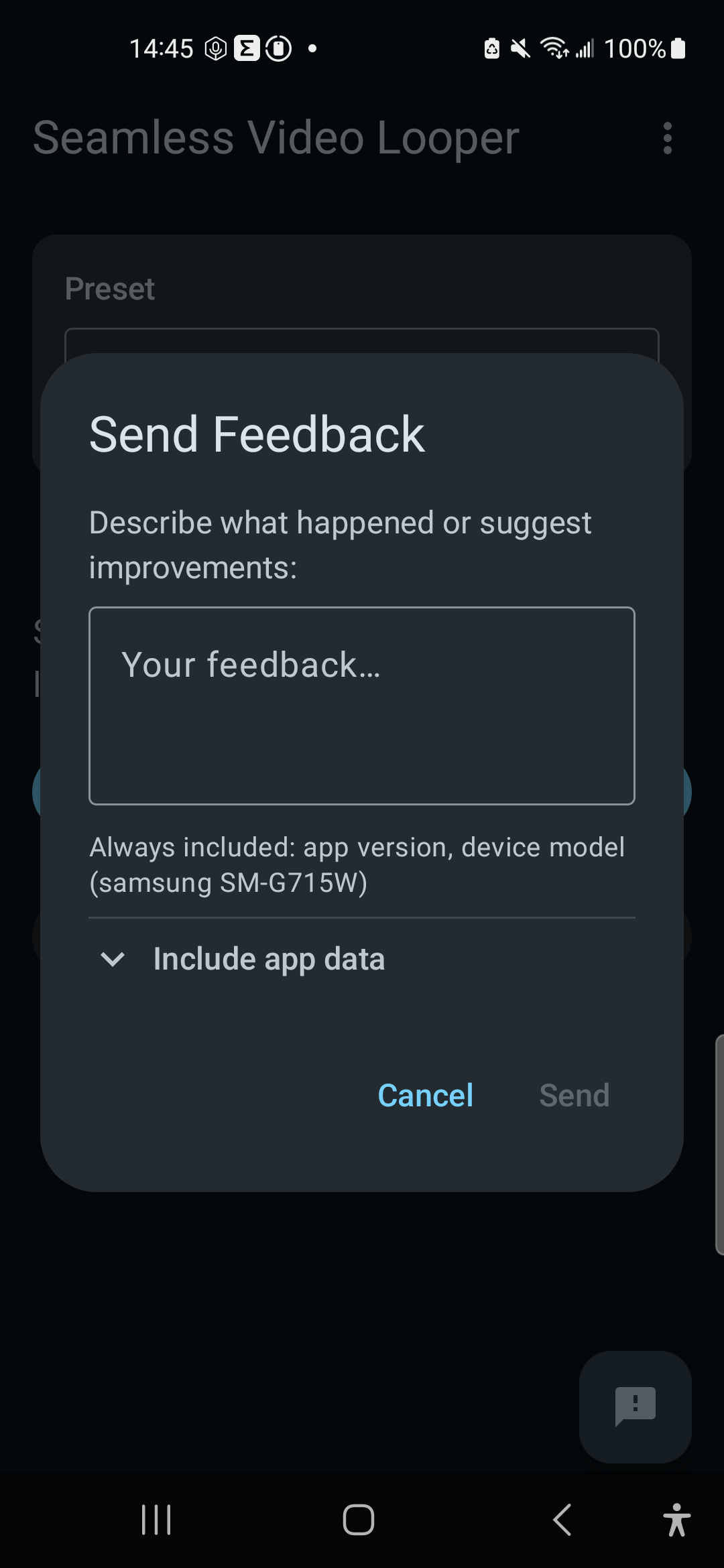
When you send feedback, you can review the included app, device, settings, log, and video-metadata context. A screenshot is optional.
Crash details can be sent automatically to help diagnose failures. Turn this off with Share crash reports in Settings.
When a render stalls, scores poorly on seam quality, or shows signs of AI melting, the app can report what it measured. This is how a failure you hit becomes a fix — without it, a render that came out wrong is invisible to us. No video, no frames, no screenshots. Turn this off with Report render failures in Settings.
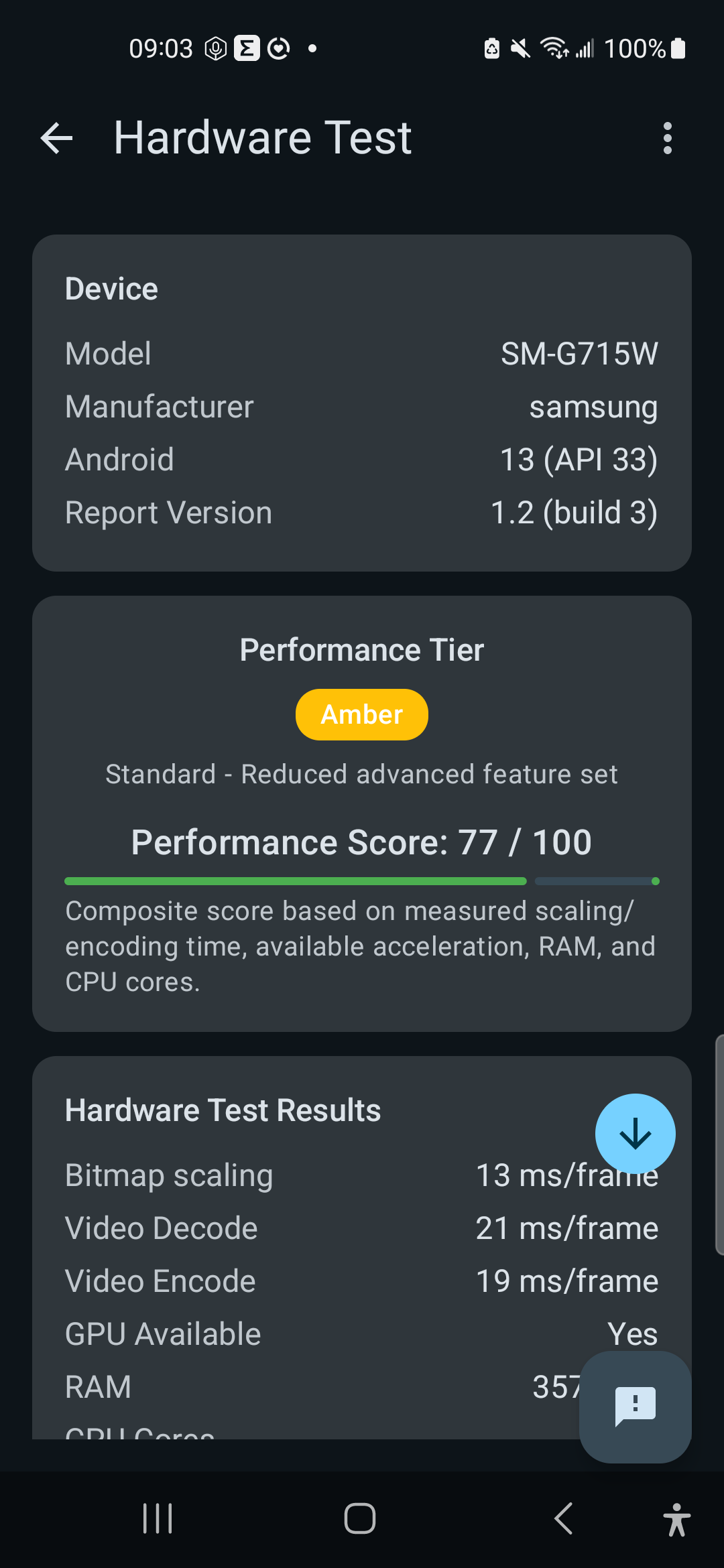
When you share a render, the app sends technical metadata about the clip, chosen settings, processing results, device identifiers, and any optional star rating.
Every record above also includes the language the app is showing you. If your device asked for a different language than what's actually displayed — say, a language we don't fully support yet, or you set the app to a different language than your device's default — that's included too. Knowing which of the 25 shipped languages people actually use, and which languages people are asking for that we don't yet ship, is how translation effort goes where users are, and how language-specific problems get caught.
Two screens straight from the app.
Firebase creates an anonymous app identifier, used with Android ID to group related reports. The app contains no advertising or general usage-analytics SDK.
Submitted records are stored in Firebase Firestore. Optional feedback screenshots use Firebase Storage; the local screenshot cache expires after 30 days. A fixed server-retention period is not currently published.
Google Play separately handles installation, updates, and store-level data under Google’s policies.